
Self-Education University: How I improved my handwriting
five simple practices to help you refine your handwriting

If you want to improve your handwriting further, you’ll find additional exercises and courses on my website raniagebagi.com.
Hi everyone!
For a long time, I believed that handwriting was something fixed. Something that develops over time, a quiet extension of your personality that can’t really be shaped. But over time, I realized how limited that belief was.
What surprised me most was how quickly the mind begins to adapt once you bring awareness into the movement. Writing often feels automatic, something we’ve done for years without thinking. And yet, the patterns can shift.
Because handwriting is something we return to almost every day, I’ve come to see it as something worth paying attention to. Not in a forced or perfectionistic way, but in a more intentional one. The way you write slowly begins to mirror the way you move through the world. And in a quiet way, it can feel empowering. Almost like shaping a small part of your identity with your own hands.
In a world that moves so quickly, filled with keyboards and screens, handwriting feels different. Slower. More personal. It asks you to pause, even if just for a moment. And I’ve started to feel that this slowness isn’t just aesthetic, it’s something we genuinely need. For our mind, and for our nervous system.
Writing by hand has a grounding quality to it. It creates a sense of presence. There’s a difference between thinking something and writing it down. And we all feel that difference the moment we do.
What I also began to notice is how intimate handwriting actually is. The first time you see someone’s writing, you’re not just seeing letters on a page. There’s something personal in it, almost vulnerable. And at the same time, deeply fascinating.
That’s why I wanted to share a few things that helped me reshape my own handwriting over time. A style that feels soft, almost romantic. Something that makes people pause, even if just for a moment.
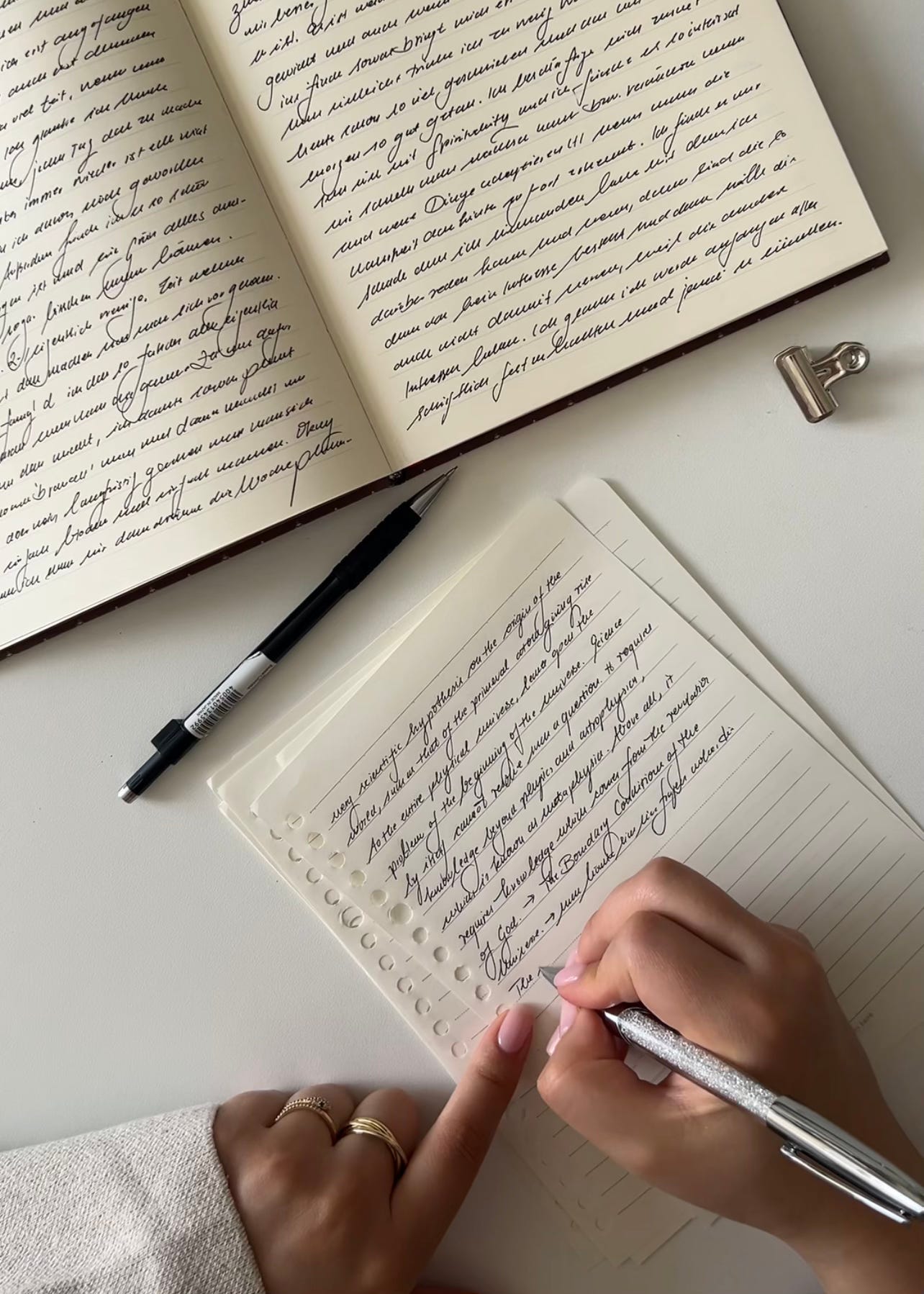
1. Begin with simple daily movements
Before you try to change how your letters look, you need to prepare the movement itself. Your hand needs to warm up.
Handwriting is not just aesthetic, it’s motor control. It’s coordination between the brain, wrist, fingers, and rhythm. And like any physical practice, it responds to repetition.
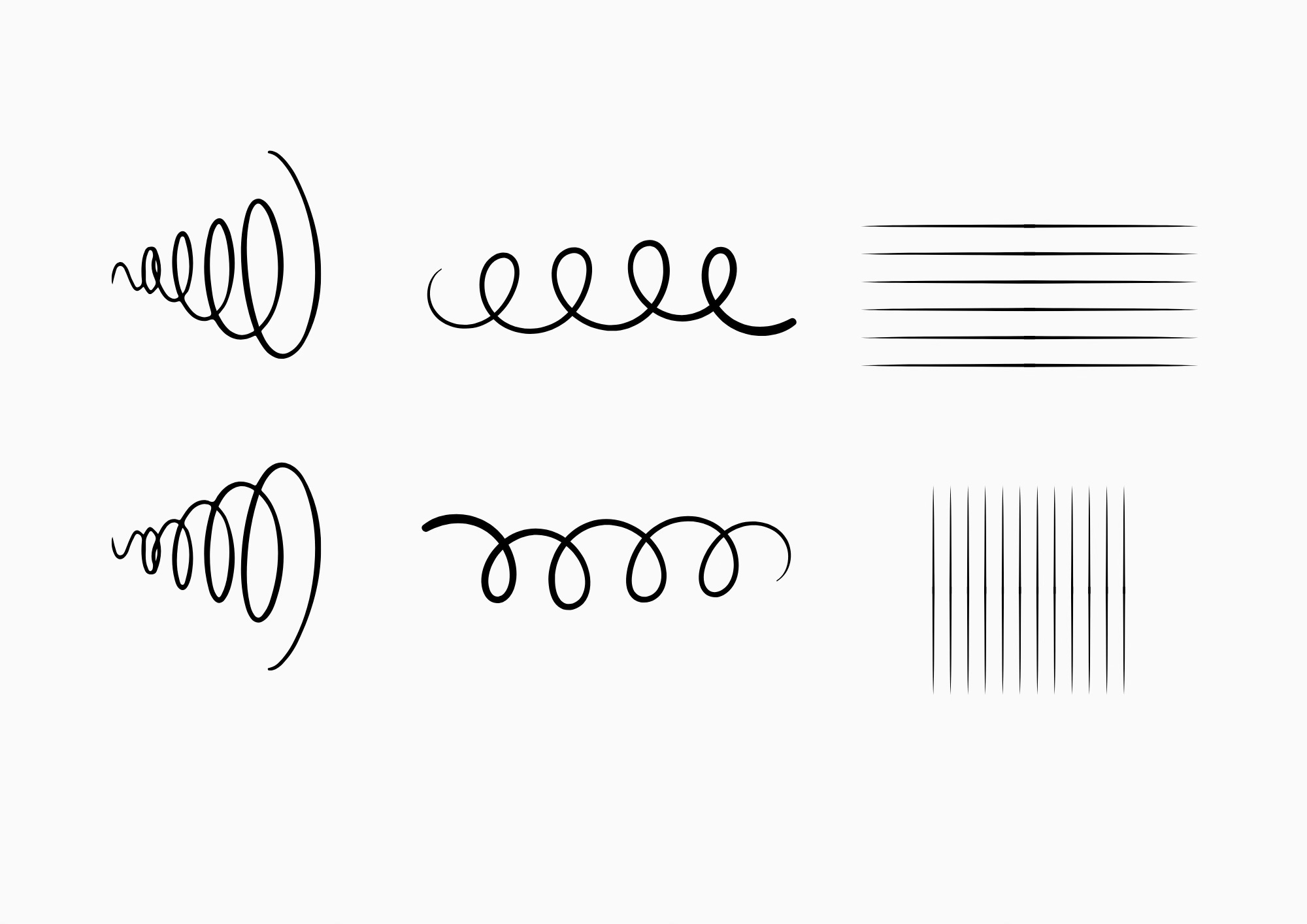
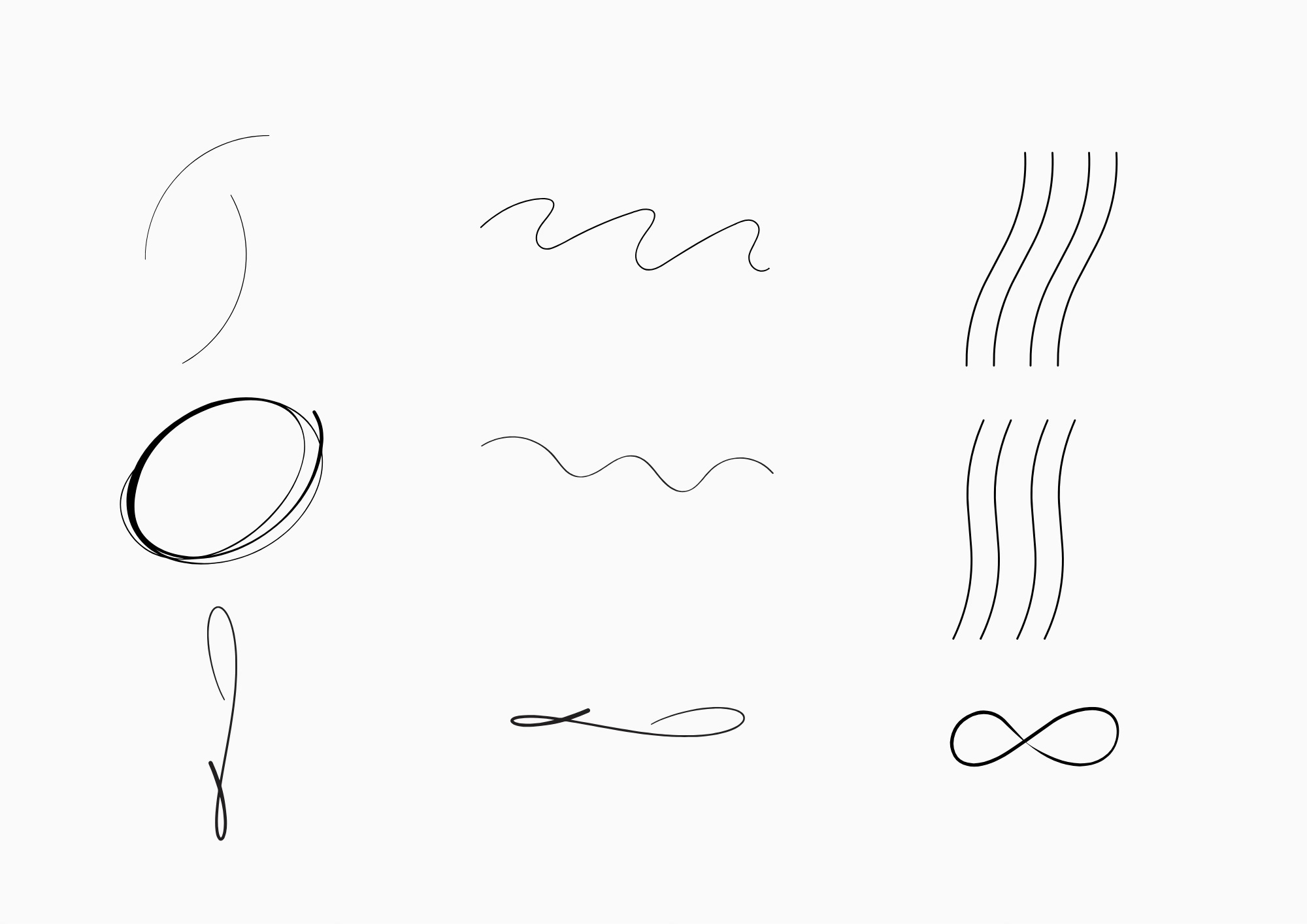
That’s why I recommend starting with small daily exercises. Some movements focus on loosening the wrist and creating flow. Others train precision and control. They might seem simple, but consistency is what changes the way your hand moves.
Below, you’ll find a few images with simple exercises you can follow.
You train:
• fine motor control
• pressure awareness
• patience
• steady, continuous movement
Without realizing it, you’re teaching your nervous system how to slow down and how to guide your hand with precision instead of haste. All of this later translates into more flow and stability in your handwriting.
2. Choose tools that support your movement
One of the biggest shifts I noticed didn’t only come from changing the shape of my letters, but from something much simpler: the tools I was using.
At first, I didn’t pay much attention to it. A pen was just a pen. But over time, I began to feel how much it actually changes the experience of writing. Different pens move differently across the page. A ballpoint pen has a certain resistance. A fountain pen, on the other hand, flows more easily. The ink, the pressure, the way the pen responds to your hand, all of it influences your movement.
And once you start noticing these differences, your writing begins to change with them.
If you’re working toward a softer, more flowing style, a fountain pen naturally supports that rhythm. It almost guides your hand into smoother, more continuous movements. If your style is more structured, more controlled, a pen with a bit more resistance, like a ballpoint, can feel more stable.
Over time, I started choosing my pens more intentionally. Not because they are luxury items, but because they directly affect how I write, and in a subtle way, how I feel while writing.
If you’re curious, I’ve linked a shop with high-quality writing tools that I personally enjoy using: Style of Zug
But the pen is only one part of the experience. The surface you write on matters just as much.
Writing on paper feels very different from writing on an iPad. There is more friction, more control, and a certain physical connection to the movement. And then there is the paper itself. Lined, squared, dotted, or completely blank, each format gently guides your writing in a different way. If you already feel comfortable with one, it’s completely fine to stay with it. But you can also experiment, just to see how your writing responds.
I’ve noticed that thicker paper often works well for more structured, print-like handwriting, especially when you apply a bit more pressure, it creates a sense of stability. Softer or thinner paper, on the other hand, tends to support more fluid, cursive styles, where the movement matters more than sharp control. It also helps prevent the ink from spreading too much.
Personally, I like to switch between different journals with different paper depending on what I’m practicing, and also depending on how I want my writing to feel that day.
Because in the end, handwriting improves much more naturally when the physical experience itself feels pleasant.
In the next part, we’ll go deeper into the process.
You’ll learn how to:
• work with individual letters
• bring more flow into your writing
• understand how your state shows up in your handwriting
• and follow simple exercises to practice
3. Refine your handwriting, letter by letter
Another shift begins to happen the moment you slow down enough to truly observe your own writing. Not just what you write, but how you write.
I started paying attention to small details that I had never really noticed before:
• which letter I’m forming
• how I shape it
• where the pen first touches the paper
• where I lift it again
• how much pressure I apply
For most of us, writing happens on autopilot. We move quickly, without thinking, repeating patterns we learned years ago. But the moment awareness enters the movement, something begins to change. And I’ve come to realize that attention itself is often the beginning of any transformation.
Instead of looking at your handwriting as a whole, it can be much more helpful to focus on a single letter.
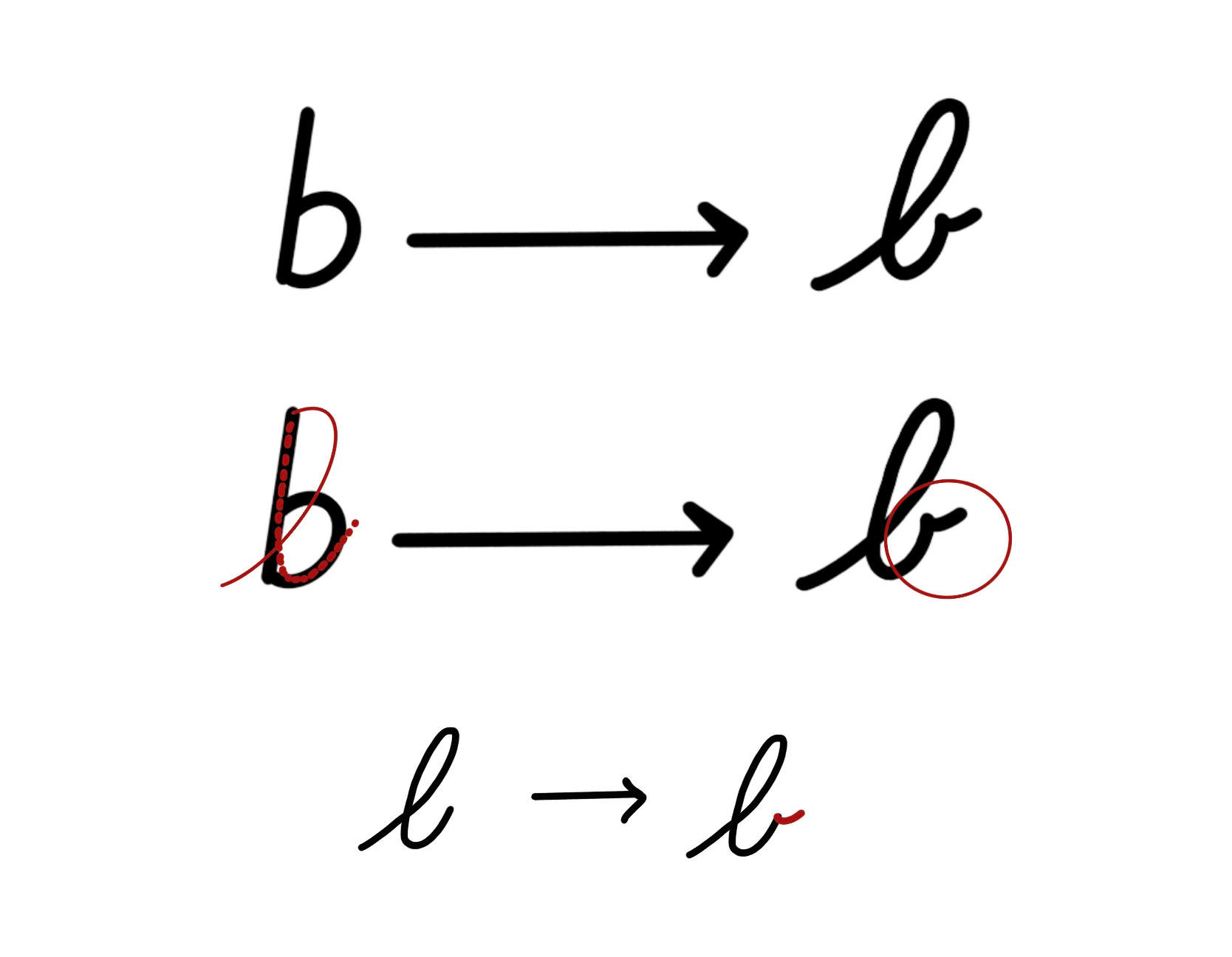
For example, the letter “b”.
Take a moment to really look at it.
How is it formed?
Where does the stroke begin?
Is the loop narrow or wide?
Is the vertical line straight, or slightly curved?
Then compare it to your own “b”. Without judging it, just observing.
And instead of trying to change everything at once, you can ask a much simpler question: What would I need to adjust to bring my letter just a little closer to the style I like?
I found that trying to change the entire alphabet at once can feel overwhelming. It becomes unnatural, almost forced. So it’s much easier to choose just a few letters, maybe three to five, and work with those consciously.
And the most important part comes after that. Once you’ve refined a letter, begin to use it in your everyday writing. Not just during practice, but in everything you write. From that moment on, let that new “b” become your “b”.
4. Let your lines flow
If you want your handwriting to feel more fluid, I’ve noticed that it often comes down to something very subtle: how you begin and end your lines.
For a long time, I would finish each letter quite abruptly, almost like a small stop at the end of every movement. But over time, I started letting the line continue, just slightly.
As if the movement doesn’t fully end, but gently fades out.
That small change alone creates a completely different feeling. The writing begins to look softer, more continuous, almost as if it’s moving across the page instead of stopping and starting. It works especially well with letters that naturally move downward, like j, g, y, f. These letters already carry a certain flow, so extending them just a little enhances that quality.
You can also bring the same intention to the beginning of a word. The first letter can hold a bit more presence, a bit more space. Almost like an invitation into what follows.
And something I found interesting is that the eye rarely focuses on every single letter.
When we look at handwriting, we’re usually drawn to certain points:
• the first letter of a word
• and the letters that stand out, especially those that extend downward
Which means you don’t have to perfect everything at once. It’s often enough to focus on a few intentional details.
And beautifully, those small changes begin to shift the entire appearance of your writing.
5. Your handwriting reflects your state
One of the most important things I’ve noticed is that handwriting doesn’t only change through technique. It changes through the state you’re in while you write.
There were days when my letters felt tight, almost tense. And other days where everything looked softer, more open, without me consciously trying to change anything. At first, I thought it was just inconsistency. But over time, I realized that my handwriting was reflecting something deeper.
The way you write is not separate from the way you feel.
If your mind is rushing, your writing often becomes smaller, faster, less intentional. If you feel calm, your lines naturally open up. There is more space, more flow, more ease in the movement.
That’s why improving your handwriting is not only about practicing shapes. It’s also about learning to slow down internally. Before I start writing, I sometimes pause for a moment. I take a breath. I let my hand rest on the paper. And I allow my movement to begin from a place that feels more grounded.
And the more you write from a calm and present state, the more your handwriting will naturally begin to soften, open, and become more intentional, without forcing it. Over time, this changes not only how your writing looks, but also how the process of writing feels. It becomes less about control, and more about connection.
There are many more things that have helped me along the way, but I’ll share them with you over time, in the next posts. For now, I hope that these few ideas can support you in your own process. Even small changes can make a difference, especially when you approach them with patience.
If this is something you want to explore more deeply, I’ve added many additional exercises on my website, in case you feel ready to continue.
And most of all, I hope you truly enjoy the process of learning.
With Love
Rania🤍
Simple exercises:
The best tip to start are French notebooks “Clairefontaine” with multilines…then it becomes writing discipline…and yes, fountain pens allow for a beautiful regular handwriting…🩶
Thanks for sharing this🥰 I personally have at least five different of handwriting, it appears depending on my mood, the pen, and the paper I use.. some types of pens and my badmood create such a terrible writings😂